
Published Aug 4, 2026

Picture this: it's the end of the month, and you're reviewing the marketing spend. A Facebook campaign here, an Instagram push there, regular content, maybe even a healthy paid ads budget. The team is working, content is going out, followers are climbing. But when you look at actual sales for that same month, you find yourself asking the same question most business owners eventually ask: "Where did all that effort go?"
This pattern repeats month after month across dozens of small and medium businesses I've worked with. The company isn't short on effort — it's missing a system that connects that effort to a specific, repeatable result. That's exactly what "the Growth Machine" means — the concept I build every piece of client work around.
In this article, I'll explain exactly what the Growth Machine is, why random effort fails no matter how intense it gets, the signs that tell you your business needs one, and the first steps you can take this week to start building your own.
What Is the Growth Machine?
The Growth Machine isn't a marketing campaign, a single digital tool, or even an active marketing team. Think of it as a factory production line: every station has a defined role, raw materials move through clear, sequential stages, and the result is a final product with predictable quality. No one relies on "luck" for the product to come out right — it's built on process.
The Growth Machine works the same way, except instead of raw materials, you have prospect interest. And instead of a production line, you have three interconnected core elements:
- Marketing — how you reach the right prospects, not just anyone who happens to see an ad.
- Sales — how you convert that interest into actual deals, with a clear path and defined responsibilities.
- Digital Operations — how you track, measure, and continuously improve everything above, instead of relying on gut feeling.
When these three elements operate separately, you get random results: a campaign sometimes succeeds by chance, sometimes fails with no clear explanation. When they're built as one connected system, the result becomes predictable growth — growth you can repeat, measure, and plan around, instead of hoping for luck each time.
Why Random Effort Fails to Produce Real Growth
A lot of companies confuse "working hard" with "working with a system." In my experience with dozens of businesses, failure tends to repeat in three specific, recognizable patterns:
The Campaign Lottery
An ad campaign this month, a completely different one next month, with no shared thread or accumulated learning between them. Every campaign starts from zero, as if the company is trying its luck again each time, instead of building on what worked before.
The CRM Graveyard
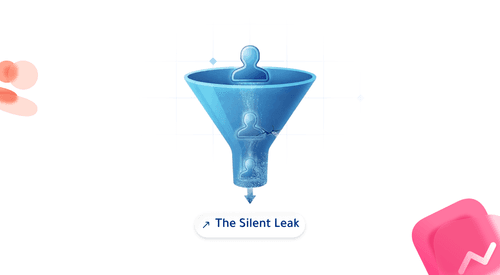
Prospects enter the system, then disappear into a list nobody follows up on consistently. The team is busy chasing new leads while real opportunities that are already there — just needing follow-up — wither away unanswered.
The Vanity Metrics Trap
Follower counts climb, engagement looks healthy, monthly reports "look" great on paper. But ask one simple question — "how much of this actually converted into sales?" — and no one has a clear answer, because the metrics being tracked have no real connection to revenue.
Without a system connecting these pieces, the company keeps repeating the same effort month after month without understanding why it sometimes works and sometimes doesn't — the exact opposite of predictable growth.
Signs Your Business Needs a Growth Machine
Before getting into the solution, it's worth pausing to check: does your business actually have this problem? Here are six common signs:
- You don't know exactly which marketing channel actually drives the most sales.
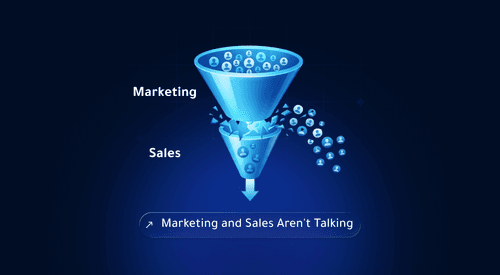
- Prospects "fall through the cracks" between marketing and sales, with no one following up clearly.
- Marketing essentially starts from zero every month, with no clear cumulative build-up.
- Performance meetings run on gut feeling more than actual, documented numbers.
- The founder still personally handles most of the sales process, even as the team grows.
- There's no documented, clear path a new hire could follow to understand how the sales process actually works from start to finish.
If you recognize three or more of these, that's a strong signal your business needs a real Growth Machine — not more scattered campaigns.
A Quick Illustration: From Chaos to System
Let's walk through a hypothetical example that reflects a very common pattern: a small B2B services company spends monthly on ads and content, generating dozens of new inquiries. But the conversion rate from inquiry to actual client is very weak, and no one on the team knows exactly why.
Applying Growth Machine logic, the first step isn't launching a new campaign — it's precisely diagnosing the current path. It often turns out that more than half of inquiries aren't followed up within the first 24 hours, and no one is clearly responsible for that follow-up — everyone on the team assumes "someone else" is handling it.
The fix usually isn't a bigger ad budget — it's a clear follow-up system: who receives each inquiry, within what time frame they must respond, and exactly what the next step is if the prospect doesn't reply. After implementing this one simple change — without increasing the marketing budget at all — the conversion rate often rises noticeably, because the same number of prospects is now being managed far better.
This is the core idea behind the Growth Machine: the problem usually isn't the "amount" of effort — it's the absence of a system that turns that effort into an actual, measurable result.
The Six Pillars of the Growth Machine
Building a real Growth Machine rests on six interconnected pillars. I'll dedicate a separate, deeper article to each one over the coming weeks, but here's a quick look at each and what it solves:
Sales-Linked Digital Strategy
Every marketing activity should be designed with a clear purpose: serving sales directly, not just "visibility" or "reach." If you can't connect a given marketing activity to its actual impact on sales, it's likely an activity without a real strategy behind it.
Scalable Lead Generation Systems
The difference between an isolated campaign and a real channel is repeatability: can you run the same channel next month the same way and expect a similar or better result? If not, you're relying on scattered campaigns, not a real, scalable system.
Marketing-Sales Alignment
When the two teams operate with separate goals and different success metrics, opportunities get lost in the gap between them. Alignment means one clear path and precisely defined responsibilities: who hands off what, exactly when, and to whom each prospect goes.
Effective CRM Follow-Up
Getting a lead is only half the battle. The other half — often the harder one — is the organized follow-up that prevents opportunities from slipping away right when they're close to becoming an actual, signed deal.
Real-Metric Performance Tracking
Dashboards that show what's actually working, not vanity numbers that just look good in a report. The goal isn't collecting as many metrics as possible — it's tracking the few numbers that genuinely predict upcoming revenue.
Continuous Data-Driven Optimization
Decisions are built on real, documented results from last month, not on gut feeling or just a "sense" that something is working. This is exactly what turns the system from a one-time attempt into a living process that keeps improving over time.
Why This Matters Specifically for Algerian SMEs
In most small and medium businesses in Algeria, the founder remains the primary person responsible for sales, with marketing handled as a side activity fit in around everything else. This model makes complete sense early on — the founder knows clients personally, and trust is built through direct relationships and local reputation.
But this model inevitably hits a ceiling. As the company grows, relying on individual effort becomes completely insufficient: the founder can't personally follow up with every prospect, attend every meeting, or remember every detail. At exactly this stage, the need for a clear system — independent of the founder's personal presence — becomes more urgent than ever.
Algeria's market is seeing a clear shift toward increasing digital adoption today, which represents a real opportunity for companies that build their systems early. The companies that successfully push past this ceiling are usually the ones that make a conscious decision to build systems before they're forced to under pressure — not after chaos becomes too costly to ignore.
5 Steps to Start Building Your Own Growth Machine
If you recognized yourself or your business in the above, here's a practical, realistic starting point you can begin this week:
- Honestly assess your current state. Sketch your current customer path on a simple piece of paper: where they come from, who follows up with them exactly, and where they typically drop off before becoming an actual customer. This simple exercise often reveals gaps surprisingly fast.
- Identify your biggest leak. Don't try to fix everything at once — that exhausts the team without a clear result. Find the weakest link in your current path — you'll often find it in follow-up or in a lack of clear ownership — and start there only.
- Document one clear path. From first contact with a prospect to actually closing the deal, write down every step on paper or in a simple document. This turns knowledge from "existing only in the founder's head" into a process any new team member can confidently follow.
- Pick just 2-3 metrics, no more. Identify the few numbers that genuinely predict upcoming sales (like weekly follow-ups completed, or lead-to-deal conversion rate), and temporarily ignore the rest, however tempting they look.
- Review weekly, not just monthly. Instead of waiting for the end-of-month report to discover a problem, set aside just 15 minutes each week to review these few metrics with your team. This allows fast course correction, instead of discovering the problem after real opportunities are already lost.
These five steps won't build you a complete Growth Machine overnight, but they're the right, realistic starting point — and exactly the same steps I start with for every company I work with, during the initial diagnostic phase.
Common Mistakes to Avoid When Starting
Trying to build the whole system at once
Jumping straight to buying a complex CRM tool, or redesigning everything at once, often ends with abandoning the whole project after a few weeks due to excess complexity. Small, focused starts beat sweeping, exhausting ones from day one.
Delegating the task entirely without personal involvement
In the early stages, the founder needs to be an actual part of building the system, even if execution gets delegated to the team later. Understanding the problem up close is necessary before handing off the solution to someone else entirely.
Treating tools as a magic fix
A new digital tool, however advanced or expensive, won't solve the problem of a missing clear process on its own. The tool supports and eases the system — it doesn't create it out of nothing.
Losing patience after two weeks
Tangible results need enough time to show clearly — usually two to three months of disciplined, consistent execution. Giving up early, before the system gets a real chance, is a very common reason this kind of initiative fails.
Frequently Asked Questions
What's the difference between a "Growth Machine" and a regular marketing plan?
A marketing plan usually focuses on activities — campaigns, posts, ads. A Growth Machine focuses on connecting those activities to a specific, measurable business outcome: actual, repeatable sales, not just "visibility" or "engagement."
Is the Growth Machine only suitable for large companies?
No — quite the opposite. It's especially useful for small and medium businesses that don't have the resources to endlessly repeat trial and error, and that need every marketing and sales effort to count.
How long does building a full Growth Machine take?
It varies depending on company size and current state, but the first step is always the same: a clear, honest diagnosis of what's actually working and what isn't, before building anything new. The first tangible results usually appear within 60 to 90 days of serious, disciplined implementation.
Do I need a big team or a huge budget to start?
Not at all. Most of the first steps — like documenting the path and picking metrics — require no extra budget, just clarity and discipline in follow-through. Tools and additional budget come later, once the system itself is clear and tested.
Where do I even start if I don't know where my business's weak point is?
That's exactly why the first step mentioned above matters so much. An outside, objective diagnostic often reveals in a few hours what could take months to discover on your own, because the founder is usually too close to the daily details to see the full picture clearly.
What's the first thing I should stop doing immediately?
Usually: launching new campaigns before fixing follow-up. Increasing the number of prospects while you're still losing half of them at the follow-up stage just means wasting a bigger budget on the same underlying problem, instead of fixing it at the root first.
Conclusion
Predictable growth isn't the result of luck — it's the result of a decision: a decision to build a system instead of settling for random execution. The five steps above, and the common mistakes to avoid, are a realistic starting point you can apply yourself this week. In upcoming articles, we'll dive deeper into each pillar of the Growth Machine, with more practical examples from real work with Algerian businesses. And if you'd rather get a direct, objective diagnosis of your business instead of starting on your own, I'm here to help.