
Published Aug 7, 2026

Picture this: you followed the advice from the last article to the letter. You built a real lead generation system — one channel you understand deeply, a clear recurring offer, a steady monthly budget. The result? 50 serious leads in a single month. For a moment, it feels like you've finally cracked it. Then the month ends and you count the actual sales: two. Out of fifty. The leads themselves weren't the problem — most of them were already genuinely interested leads when they reached out, meaning they'd engaged and shown real intent. The problem showed up right after: some didn't hear back for days, some were contacted by two different people on your team at once and got confused, and others were interested but never actually qualified — no real budget, no decision-making authority, or bad timing — even though marketing had treated them as a fully ready lead the moment they arrived.
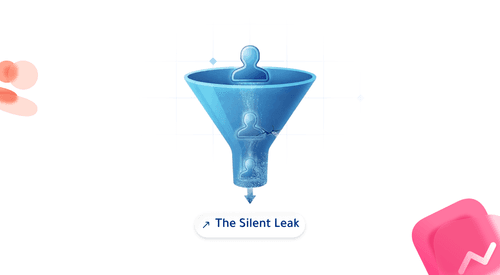
This isn't a marketing problem, and it isn't a sales problem either — it's the gap between them: the silent space where sales-ready leads disappear before they ever reach someone who can actually close them.
What Is Marketing-Sales Alignment?
Marketing-sales alignment is simply this: an explicit, written agreement between whoever generates leads (your marketing team or agency) and whoever closes them (your sales team, or you, the founder) on three specific things — exactly where the line sits between an interested lead and one that's actually interested and qualified, exactly what happens the moment that lead arrives, and how the information flows back to marketing about which of those leads actually became a paying customer.
This is where three genuinely distinct stages often get collapsed into one. A lead is simply anyone who's shown any initial signal at all — filled out a form, sent one message, made a single call — without yet knowing if they're genuinely interested, or even a fit for what the business offers. An interested lead has engaged more clearly — replied to a message, asked a question, requested more details — which shows real interest, but doesn't yet mean they're "qualified": they may not have the budget, may not be the actual decision-maker, or the timing may not be right for them yet. An interested-and-qualified lead has both shown genuine interest and been confirmed as a real fit: they have the budget, the authority, a genuine need, and reasonable timing. All three should hear from whoever handles sales — a lead that never gets a response is just a lost deal, at any stage. What changes tier to tier is what that contact looks like: a plain lead gets a prompt first response to gauge real interest; an interested lead gets the actual qualifying conversation — the budget, authority, need, and timing questions that determine fit, which is normally sales's job to ask, not a box marketing ticks beforehand; and only once that conversation confirms a real fit should a lead be treated as a hot opportunity worth pushing hard to close. Treating the second stage as if it were already the third — skipping the qualifying conversation and pushing straight to closing — is exactly what produces most of the friction between marketing and sales.
Without this agreement, both sides operate in isolation. Marketing measures its own success by inquiries and reach; sales measures its own success by closed deals alone — and both can technically "succeed" by their own metric at the very same time the business as a whole is losing deals that a little real coordination would have closed easily.
Why Isn't More Leads Enough On Its Own?
Working with dozens of businesses, I've seen this gap show up in three specific, recurring patterns:
The "Different Definition" Trap
Marketing often treats any lead that's shown any interest at all — even a single reply or a passing question — as "ready to close" and hands it off expecting a quick win, effectively conflating an interested lead with an interested-and-qualified one. Sales still contacts them, as they should — but instead of a closing conversation, they end up running the entire qualifying conversation marketing assumed was already done: is there really a budget, is this person actually the decision-maker, is the timing real. Both sides genuinely believe they're doing their job well — they just never agreed on exactly where the line sits between "interested" and "interested and qualified." So inquiries pile up as a win in marketing's eyes, while sales experiences the same pile as unplanned qualifying work, not the ready-to-close deals they were promised.
The "Black Hole Handoff" Trap
A lead genuinely arrives, but no one is clearly responsible for it. It sits in an unopened WhatsApp chat or a forgotten inbox for days, until interest cools completely or the person finds a competitor who replied faster. No one made a deliberate mistake here — the problem is that no one clearly "owned" that critical moment.
The "One-Way Street" Trap
Marketing keeps generating leads and reporting on volume and reach, month after month, but sales never sends back one simple, vital piece of information: which of those leads actually became paying customers, and why? Without that closed loop, marketing keeps optimizing the same type of campaign without ever really knowing if it's attracting the right kind of customer at all — and sometimes makes the problem worse by scaling up exactly the wrong volume.
In practice, many businesses fall into all three patterns at once without realizing it — a fuzzy definition, a silent handoff gap, and a total absence of feedback all reinforcing each other, which makes the root cause hard to diagnose without looking at the whole process end to end.
Signs You Have a Marketing-Sales Gap
- You can tell me exactly how many leads arrived last month, but not how many of them actually became paying customers.
- Blame shifts between "marketing" and "sales" — even if you're the one person doing both jobs — whenever a month underperforms.
- A lead can wait more than 24 hours for any response at all, and no one notices until it's already too late.
- There's no written, agreed-upon definition of when a lead becomes genuinely interested, and when that interest is actually qualified enough to be treated as a hot opportunity worth pushing hard to close.
- Two different people on your team have accidentally contacted the same lead, or a lead has fallen through the cracks entirely without anyone noticing.
- Marketing keeps running the same type of campaign month after month without ever hearing back whether last month's leads actually turned into paying customers.
If three or more of these sound familiar, you're likely losing real deals — not because your leads are weak, but because of the silent gap that swallows them between arrival and actual follow-up.
A Hypothetical Example: From Chaos to a Clear Handoff System
Imagine a home renovation studio that runs a successful ad campaign and receives about 30 serious inquiries in a single month. The founder, excited by the unusual response, tries to personally reply to everyone after work hours each day. But by the time he finally reaches some of the inquiries, they've already spoken to a competitor who responded faster. Plenty of genuinely interested leads are lost this way — not because the offer was weak, but simply because the response came too late.
Instead of continuing this way, the team sets up a simple triage system: every lead is tagged the moment it arrives into one of three clear categories — "ready to buy now," "still exploring options," or "not a fit right now" — with a maximum response time attached to each category (the first within two hours, the second by end of day at the latest). One specific person is also made responsible for following up on each lead the moment it's tagged, so no lead gets contacted by more than one person, and none gets left without a response at all.
After just a few months of this simple system, the team sees a clear, measurable improvement in their close rate — not because more leads came in, but because far fewer of them were lost in the gap between arrival and actual follow-up.
The 5 Components of Real Marketing-Sales Alignment
A written, mutually agreed definition of what "qualified" actually means — not just "interested"
Agreeing that a lead "showed interest" isn't enough on its own. You need a short, specific set of criteria (roughly: is there a real budget? is this person the decision-maker or close to it? is the need genuine and a real fit? is the timing reasonable?) that separates a merely interested lead — who still deserves a real qualifying conversation — from one that's interested and qualified and worth prioritizing hard toward a close. Whoever generates leads and whoever closes them agree on it together, so the two sides never argue later about whether a specific lead was "ready to close" or still just interested — and don't waste time debating quality instead of focusing on follow-up.
A maximum response-time rule, stated and binding
However simple — "every lead is contacted within two hours during business hours," for example — this rule alone makes a bigger difference than almost anything else on this list, and it's usually the easiest to implement and the fastest to show results.
Completely clear ownership of every lead
One person, or one clearly defined role, is responsible for each new lead the moment it arrives, with zero ambiguity about who's following up — even if that's the same person wearing every hat in a very small business.
A real, closed feedback loop
Whoever's handling sales reports back — weekly or at least monthly — on which leads actually became paying customers and specifically why, so marketing can adjust who it targets and what it says based on real market data, not assumptions.
One shared, visible place to track every lead's status
It doesn't need to be a complex or expensive CRM — even a simple shared spreadsheet beats scattered WhatsApp chats and personal phones, as long as everyone actually uses it consistently, not just once every few weeks.
Why This Matters Specifically for Algerian SMEs
In many Algerian SMEs, "marketing" and "sales" aren't even formally separate departments — often the founder personally handles sales while an outside agency or a single hire handles marketing. This makes fixing alignment theoretically easier, since there are fewer parties that actually need to coordinate — but it also makes the gap easier to ignore, precisely because there's no obvious friction between two departments blaming each other. The gap just quietly eats deals without anyone suspecting it's a handoff and coordination problem at all, rather than a product or market issue.
When a business works with an external marketing agency, which is very common in this market, the gap becomes more visible in practice, but also more urgent to close: the party generating leads and the party closing them are genuinely two separate entities, which makes an explicit, written agreement on the lead definition and the response-time rule not a nice-to-have, but a real requirement for the collaboration to actually work over the medium and long term.
5 Steps to Close the Marketing-Sales Gap This Week
- Write down a short, specific set of criteria (2-3 at most) that separates a merely interested lead from an interested-and-qualified one in your business specifically — things like budget, decision-making authority, and timing — and get whoever generates leads and whoever follows up on them to agree on it explicitly, in writing.
- Set a maximum response-time rule, and make it visible to everyone involved (for example: every lead is contacted within two hours during business hours).
- Clearly assign who is responsible for each new lead the moment it arrives — even if that's the same person handling everything right now.
- Create one single, shared, visible place to track every lead's status — even a simple spreadsheet works, as long as it's actually used consistently.
- Set a fixed 15-minute weekly or monthly review of which leads became paying customers, which didn't, and why — and feed that information straight back to whoever handles marketing.
Common Mistakes to Avoid
Assuming that buying CRM software alone solves the alignment problem
A tool without an agreed shared process quickly turns into an expensive, neglected spreadsheet nobody actually updates.
Measuring marketing success by lead volume alone, without closing the loop on their actual quality and what happened to them afterward
Leaving follow-up to "whenever there's time" instead of a clearly stated maximum response window
Blaming the other side — marketing blaming sales, sales blaming marketing — instead of fixing the shared process that connects them
Relying on memory alone to track who contacted whom and when, instead of writing it down somewhere any relevant person can check at any time
Treating every interested lead as automatically qualified — skipping the actual qualifying conversation and pushing straight to closing — instead of checking it against your qualification criteria first
This is exactly what produces the mutual frustration described in the "Different Definition" trap above.
Frequently Asked Questions
What's the difference between a marketing problem and a marketing-sales alignment problem?
A marketing problem is about attracting leads in the first place — their number or quality at the moment they arrive. An alignment problem happens right after: genuinely interested leads arrive, but they get lost or go cold — either because no one actually checked whether they were qualified, or because whoever did check didn't follow up fast or clearly enough once the lead arrived.
How fast should a new lead actually be contacted?
Generally, the faster the response, the higher the chance of converting them into a customer. A simple rule like "within two hours during business hours" makes a noticeably bigger difference than leaving the timing unstated or unenforced.
Do I need CRM software to fix this?
Not necessarily, especially at the start. What actually matters is having a clear process and one shared place to track every lead's status — a simple spreadsheet can be entirely sufficient early on, as long as everyone actually uses it consistently.
What if I'm the one doing both marketing and sales myself?
The same principle applies, just without the need to coordinate between two people. Write your own clear definition of a "ready lead," set yourself a strict response-time rule, and hold yourself to it as if it were a real agreement with someone else — personal discipline replaces team coordination here.
How do I know if the handoff gap is actually costing me deals?
Review your last 10 to 15 leads: how many waited more than a full day for a first response? How many do you not actually know the outcome for? If either answer is "a fair number," the gap is very likely costing you real, tangible deals right now.
If I only have time to fix one thing, what should it be first?
Set a clear maximum response-time rule for any new lead, and make it stated and binding. This single change, as simple as it sounds, is usually the one with the fastest, most direct impact on how many deals actually close.
Does this mean only qualified leads should ever hear from sales?
No — every lead that shows real interest should get a response; one that never hears back is simply a lost deal. What changes with qualification is what that contact looks like, not whether it happens. A plain lead gets a quick first response. An interested lead gets an actual qualifying conversation — that's normally where the budget, authority, need, and timing questions get asked, by whoever handles sales. Only once that conversation confirms a genuine fit should a lead be treated as a hot opportunity worth pushing hard to close.
Conclusion
Good leads rarely disappear because the product is weak or the offer isn't convincing — they disappear, more often than not, in the silent gap between the moment they arrive and the moment someone actually follows up with them seriously. Closing that gap doesn't require a bigger team or a more expensive tool — it requires a clear, written definition, a response-time rule, unambiguous ownership, and a simple feedback loop that actually gets used. Even after this gap is closed, one more risk remains, quieter but just as costly: what happens to a lead who has genuinely engaged with you, but whose follow-up afterward wasn't strong enough to keep them interested through the final decision? That's exactly the topic of the next article — the fourth pillar of the Growth Machine: effective CRM follow-up systems that stop deals you've already won from quietly slipping away. If you'd like a direct review of the handoff process between marketing and sales in your own business, I'm here to help.